Chasing Light | Atmosphere, Colour and Landscape Painting
Why does light have such a powerful effect on the way we experience a landscape? In this article, Western Australian artist Kevin McKeown explores his ongoing fascination with light, atmosphere and colour, and how his approach to painting has evolved from simply depicting objects to capturing the feeling that light creates. From observations in his garden to the influence of Impressionist painters, this is a personal reflection on the pursuit of atmosphere and the challenge of translating fleeting moments into paint.
Kevin McKeown
6/20/20263 min read
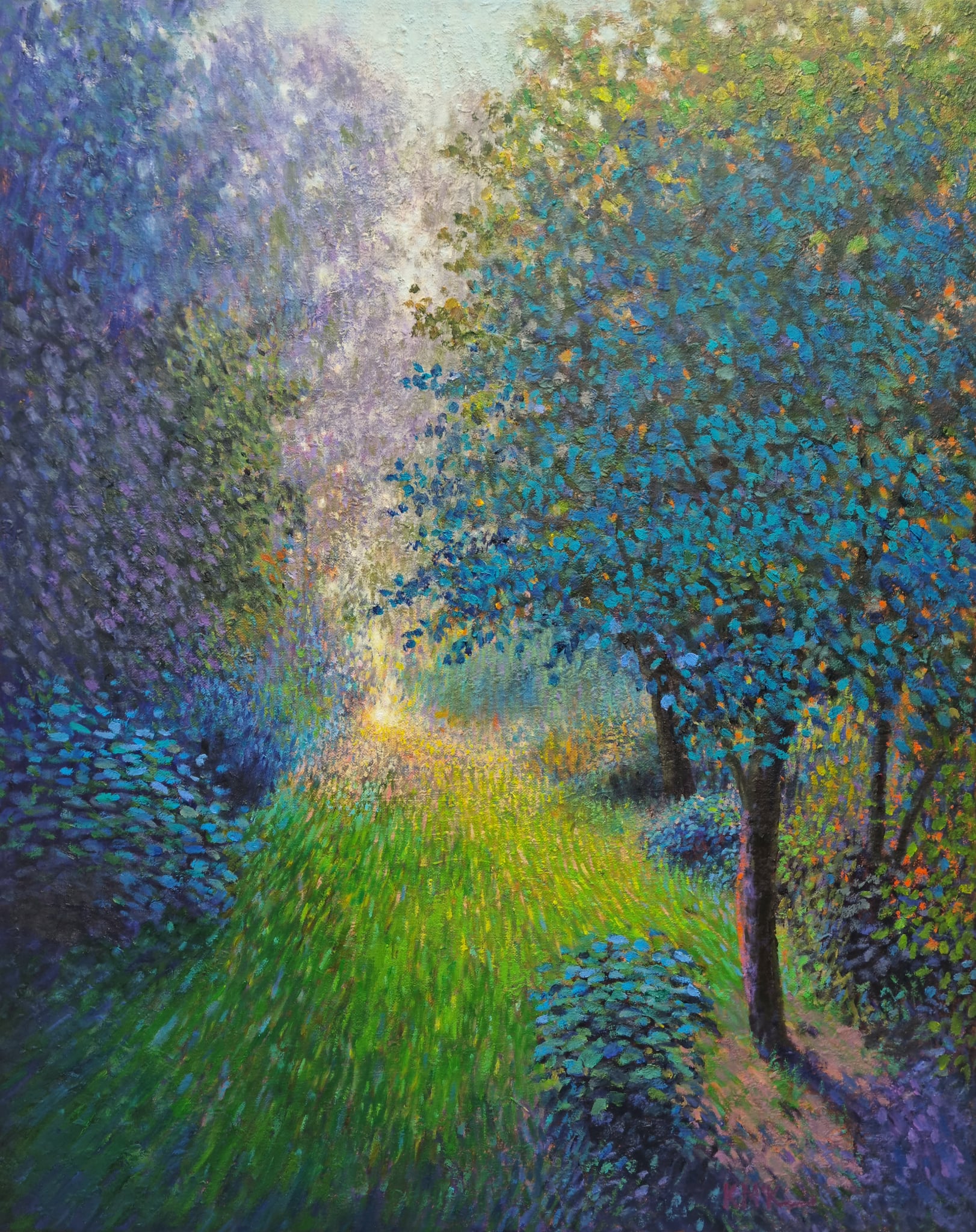
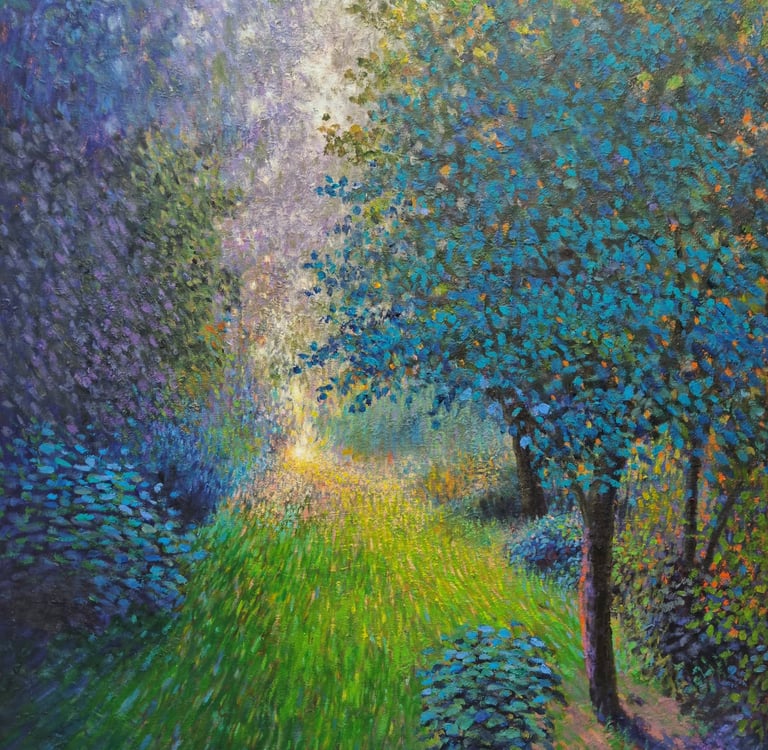
Chasing Light
If there's one thing that has become increasingly important in my painting over the last few years, it's light.
Not just the appearance of light, but the atmosphere it creates and the way it transforms an ordinary scene into something worth stopping for.
When I first started painting, I was primarily focused on the objects in front of me. A tree was a tree. A shrub was a shrub. My goal was to accurately capture what I could see.
Over time, that began to change.
These days, I'm far less interested in the tree itself and far more interested in what the light is doing to it. How does the direct sunlight differ from the reflected light? Which shadows are cool and which contain unexpected warmth? How does light move through foliage, bounce off surrounding surfaces and create depth within a scene?
The more I paint, the more I realise that light is often the real subject.
Recently I've found much of my inspiration close to home. Our garden has changed considerably over the last few years. What began as a blank canvas has gradually matured into a layered landscape of trees, shrubs and native plants. As the trees have grown, they've created new opportunities to observe the changing character of light throughout the day.
Early mornings and late afternoons are my favourite times to look.
Light filtering through branches, casting shadows across lawns and illuminating parts of the garden while leaving others in cool shade can create moments that feel almost magical. They're often fleeting. A few minutes later, the effect has disappeared entirely.
Those moments frequently become the starting point for a painting.
The final work is rarely a faithful reproduction of a particular scene. Instead, I take elements from observation and rearrange them to create the atmosphere I'm trying to capture. A tree from one location might sit beside foliage inspired by another. The composition changes. Colours are adjusted. Certain passages are simplified while others are emphasised.
The goal isn't accuracy.
The goal is to recreate the feeling.
Once a composition is established, my attention turns to the things that make painting both challenging and endlessly fascinating: colour relationships, tonal values, edges and atmosphere.
I'm constantly asking myself questions.
Can I create the sensation of sunlight without simply making it brighter?
Can warm and cool colours work together to suggest light moving through a scene?
Can a soft edge create more atmosphere than a sharp one?
How much information can I remove while still allowing the viewer to understand the form?
These are the kinds of problems that keep me returning to the easel.
Artists such as Vincent van Gogh have influenced my approach to mark making and colour, particularly in the way individual brushstrokes can create movement and energy. More recently, I've been captivated by the work of the Russian Impressionist Konstantin Korovin. His ability to capture the effects of light and atmosphere is extraordinary and serves as a reminder of just how much there is to learn.
The light here in Western Australia also plays a significant role in my work. The skies are often a clear, intense blue and the quality of light feels incredibly pure. Combined with our unique flora and open spaces, it creates endless opportunities for exploration.
But perhaps the biggest lesson I've learned is that painting light isn't really about painting light at all.
It's about painting the feeling that light creates.
A successful painting, for me, is not one that perfectly records a scene. It's one that evokes something. A sense of calm. A memory. A feeling of being immersed in a place.
I know a painting has succeeded when it still makes me stop and look long after it has left the easel. Even after spending countless hours working on it, there are some paintings that continue to reveal something new each time I pass by.
Those are the paintings I remember.
And that's why I continue chasing the light.
The closer I think I am to understanding it, the more I realise how much there is still to discover.
Kevin McKeown ART
Vivid landscapes inspired by nature's beauty from Australian landscape artist Kevin McKeown.
Connect
© 2025. All rights reserved.
Sign up for my email newsletter The Canvas Club for early access to new artworks & unlock 10% Off sitewide.
Email me to ask about a painting, a commission or anything else that's on your mind. I'd love to hear from you!